Mediocristan vs Extremistan
Last weekend I found myself in hospital with mystery chest pain. This led me to think many brand-new thoughts, such as: ‘AAAAAGH shit shit shit I’m too young to die’. At the same time, I couldn’t help but be fascinated by my up-close-and-personal tour of the public health apparatus. After being covered in electrodes and wheeled through the emergency room bleeping and blooping—just like on TV!—I was swabbed, exsanguinated, irradiated, ultra-sounded, interrogated, and eventually served lunch, for a loose definition of ‘lunch’. A few hours later, the doctors were satisfied there was no problem with my heart, and I was free to go.1
Good old New Zealand. No ruinous hospital bill dangling over my head, no labyrinthine insurance claim to navigate. In fact, there was no paperwork whatsoever. I just strolled straight out the front door.2
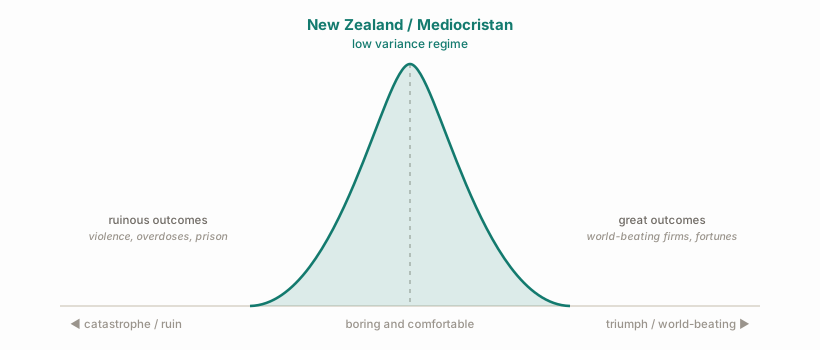
The experience got me thinking about New Zealand as a kind of spiritual aspirant to Nassim Taleb’s Mediocristan: a fictional province in which all your outcomes in life are mild and bounded, clustering tightly around the average. As a New Zealander, you are unlikely to be exposed to top-tier, world-beating opportunities, but you also don’t have to think twice about whether you can afford to go to the hospital.
The distribution of life outcomes in Mediocristan looks something like this:
Cross the border into Extremistan, and you enter the realm of wild randomness. Here, the distribution of life outcomes is fat-tailed: a single freakish event can outweigh all of the other data points combined. Trillionaires live next door to paupers. There are midgets the size of your fingernail, and giants as tall as skyscrapers. Every new technology has the potential to wipe the entire country out of existence, or create a paradise beyond the wildest dreams of its inhabitants.
If New Zealand is Mediocristan, then the spiritual counterpart to Extremistan is obviously the United States of America.
In the land of the brave and home of the free, the best thing that can happen to you is very, very good; the worst thing that can happen to you is very, very bad.
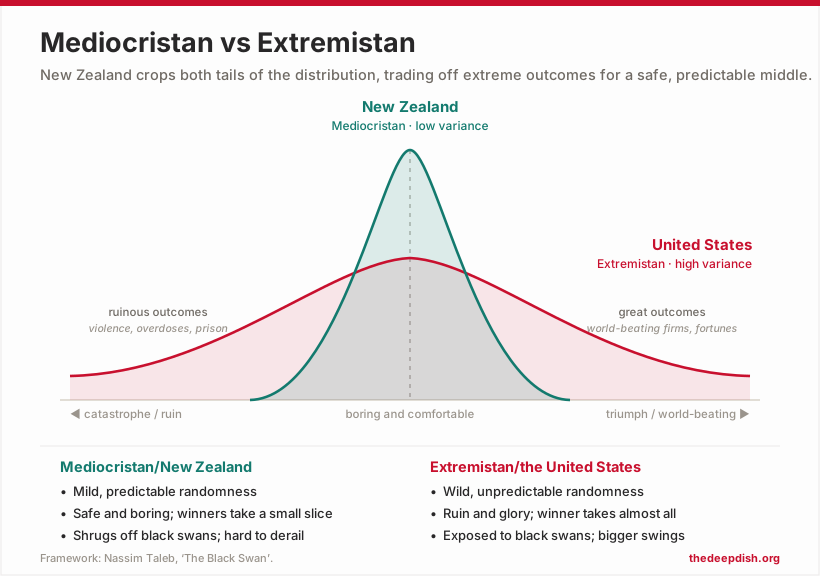
Here’s what the distribution of life outcomes looks like under the two regimes:
Obviously Taleb never intended to map this distinction onto actual countries, but let’s run with it for a moment.
New Zealand is mild and predictable because we are unusually good at cropping the left tail of the distribution: not only reducing the frequency of tail-risk events, but the magnitude of their impact.
How do we pull this off?
In a word: geography. New Zealand is a little pimple on the arse-end of the world. It’s possible that you, overseas reader, do not fully comprehend how isolated we are down here in the Pacific, so here is a perspective of the Earth that you have probably never even seen before:
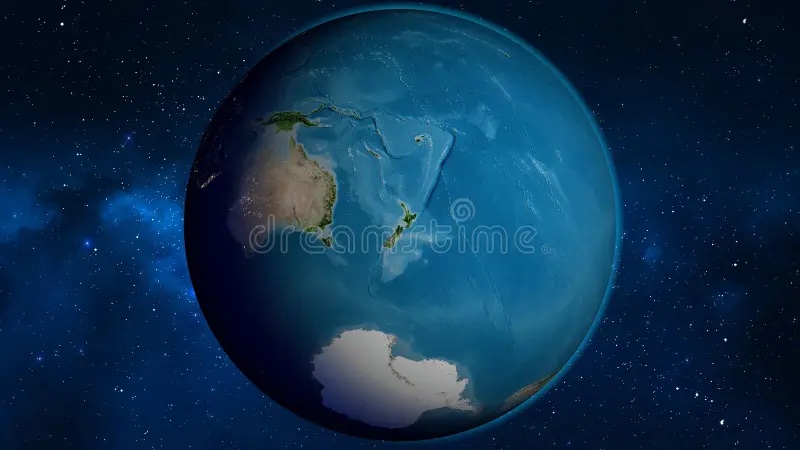
No wonder New Zealand literally struggles to put itself on the map.
Our isolation is mostly bad for us, on which more later. But in some ways it is very good:
- New Zealand would weather a nuclear exchange better than arguably any other country in the world
- We are so strategically unimportant that historically, we got away with spending a tiny proportion of our budget on defence
- It’s essentially impossible for asylum seekers to get here by boat; instead we get to sanctimoniously grandstand against Australia while free-riding on their deterrence program (and taking in a pathetic number of refugees ourselves)
- It is much harder to smuggle drugs, weapons, and biological agents vs a porous land border
So our isolation bakes in a natural protection against black swans. During covid, New Zealand was one of the only countries in the world that managed to seal itself off against a highly infectious disease, carrying on something close to normal life for long stretches while everyone else was in lockdown.
But there is also a cultural element to our strong defensive game. New Zealand has a well-established social safety net, compulsory no-fault accident insurance, and a stable democracy. If you are stupid, or irresponsible, or plain old unlucky, your misfortune will rarely lead you into a life-destroying spiral.
Compare New Zealand’s rates of ruinous life outcomes vs the United States:
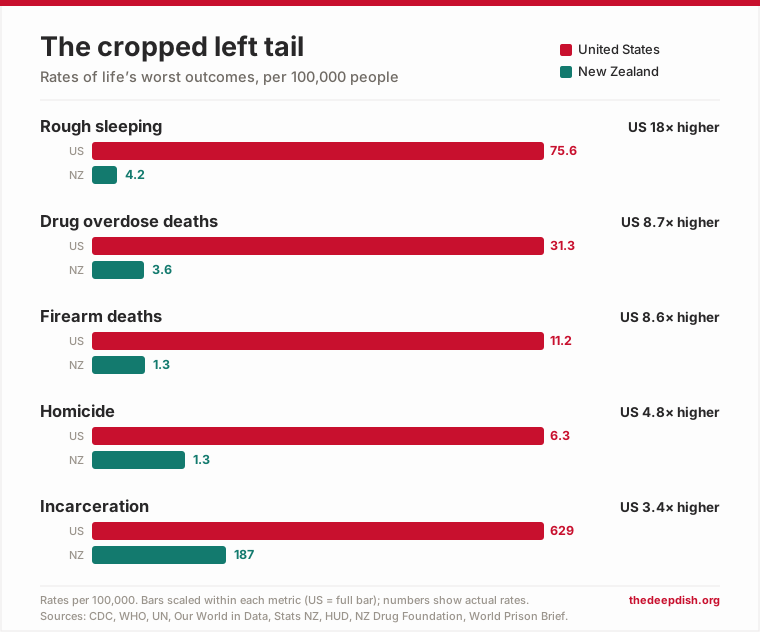
If all you care about is avoiding the risk of ruin, New Zealand is a good place to be. The flipside is that there are also far fewer opportunities for transformative upside.
But why not both? Is it possible to cap your downside risk, while getting exposure to unbounded upside?
The Brain Drain, explained: A barbell strategy for careers
In a volatile world, the ideal strategy is to be both hyper-conservative and hyper-aggressive at the same time, while avoiding the fragile middle ground. This is called a barbell strategy.3
An extraordinarily rich and powerful person can create a barbell that spans geographies. Peter Thiel spent a grand total of 12 days in New Zealand prior to being granted citizenship: he maintains full exposure to the fruits of US dynamism, but he also has a private jet on the runway ready to whisk him away to his hidden hobbit hole as soon as the bombs start flying.
For normal folk, the more accessible strategy is a serial barbell. With New Zealand in your back pocket as a fallback option, you move to a dynamic and high-variance environment: London for financiers, NYC for the arts scene, SF for tech, etc. If you do well, you will accumulate plenty of money and career capital, but unless you do really well, you cannot create an artificially safe and beautiful life wherever you go. You still live in a poky London flat; your toddler is playing with cigarette butts in the street. The idyllic pohutukawa-fringed beaches of your bare-footed childhood are calling you home.
And that’s the rational move. Once you have something to lose, it makes sense to switch back to playing defence.
That’s the arc that both my wife and I followed, along with a decent chunk of our friend group. We have been overseas and had some adventures and got some loot. My wife took a 5x paycut from her London job to come home. It doesn’t matter. We are raising our kids in one of the highest quality-of-life cities in the world, and it’s a very good life indeed.4
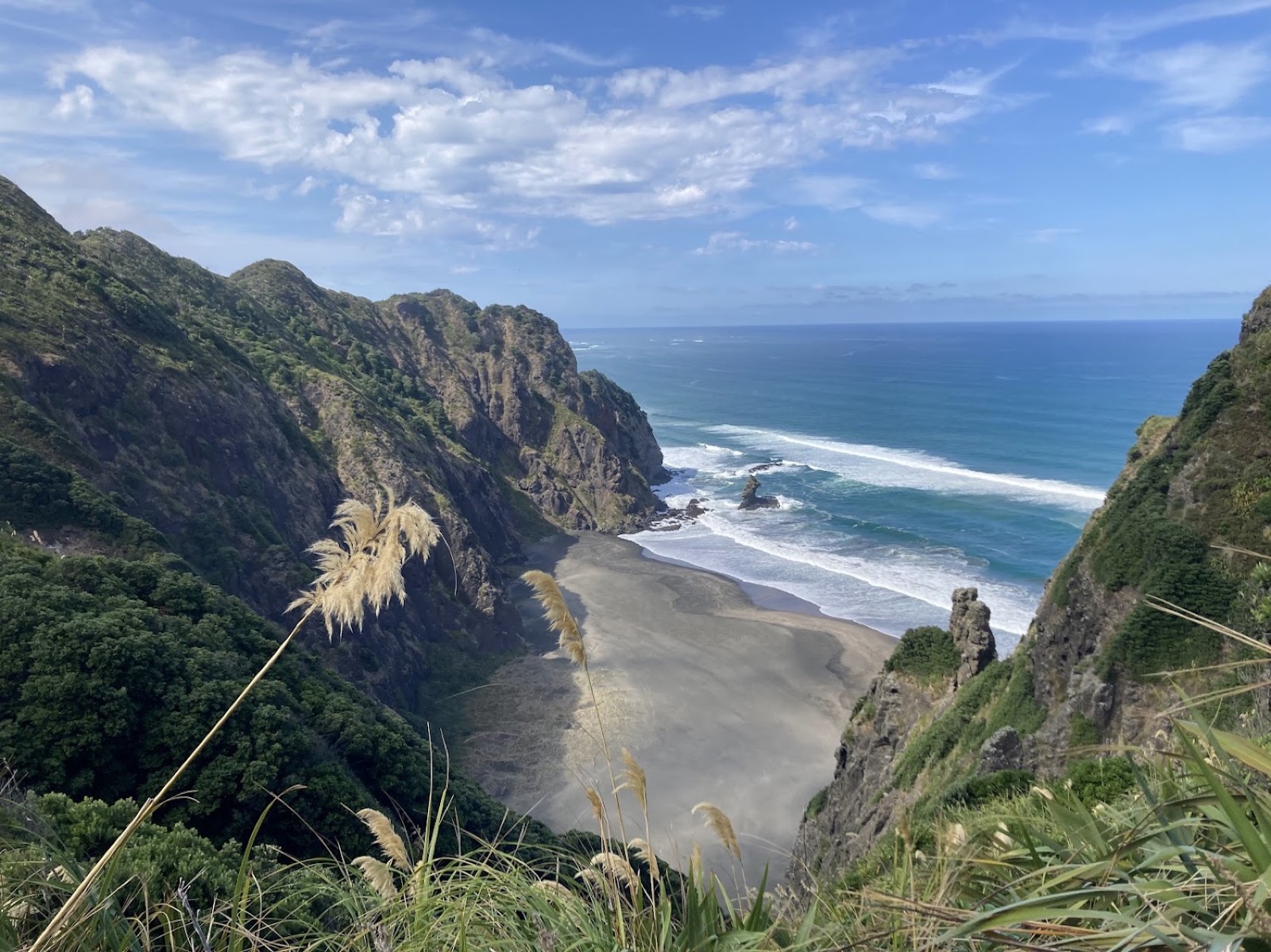
So for me personally, it is very convenient that New Zealand is such a boring and low-variance country. Radical change would almost certainly cut against my interests.
Since I am not a total psycho, I also care about the wellbeing of my fellow countrymen. The vast majority of New Zealanders do not get to stage the serial barbell described above. Instead they either leave permanently in search of better opportunities, or stick around as lifelong citizens of Mediocristan.
That wouldn’t be such a bad fate, but there are early warning signs that even New Zealand’s ‘Mediocristan’ status is under threat: an increasingly long tail of illiterate kids, a rise in gun crime, bollards and security guards at supermarkets, panhandlers at every traffic light, failing infrastructure, looming electricity blackouts, and other disturbing things that I have seen plenty of times in the developing world but never before in my own country.
New Zealand has been either stagnant or in outright decline throughout my entire adult lifetime. If we want to stop the slide, we need to regain some of the dynamism and innovation that made this country great in the first place.
If you are surprised to learn that New Zealand ever had any mojo to begin with, I will now try to convince you that we once had a real claim to being the Greatest Country in the World.
Once Were World-Beaters
The economist Michael Reddell says that by the best international indications, we were either the richest country in the world in 1913, or at least second or third richest:
Our living standards were among the best in the world. We’ve been downhill since then. That downhill path really accelerated after the Second World War. Up to around 1950, we were more or less holding our own.
Reddell maintains a bunch of depressing charts on his blog, Croaking Cassandra, but merely eyeballing GDP per capita, it’s easy to see the slide into mediocrity:
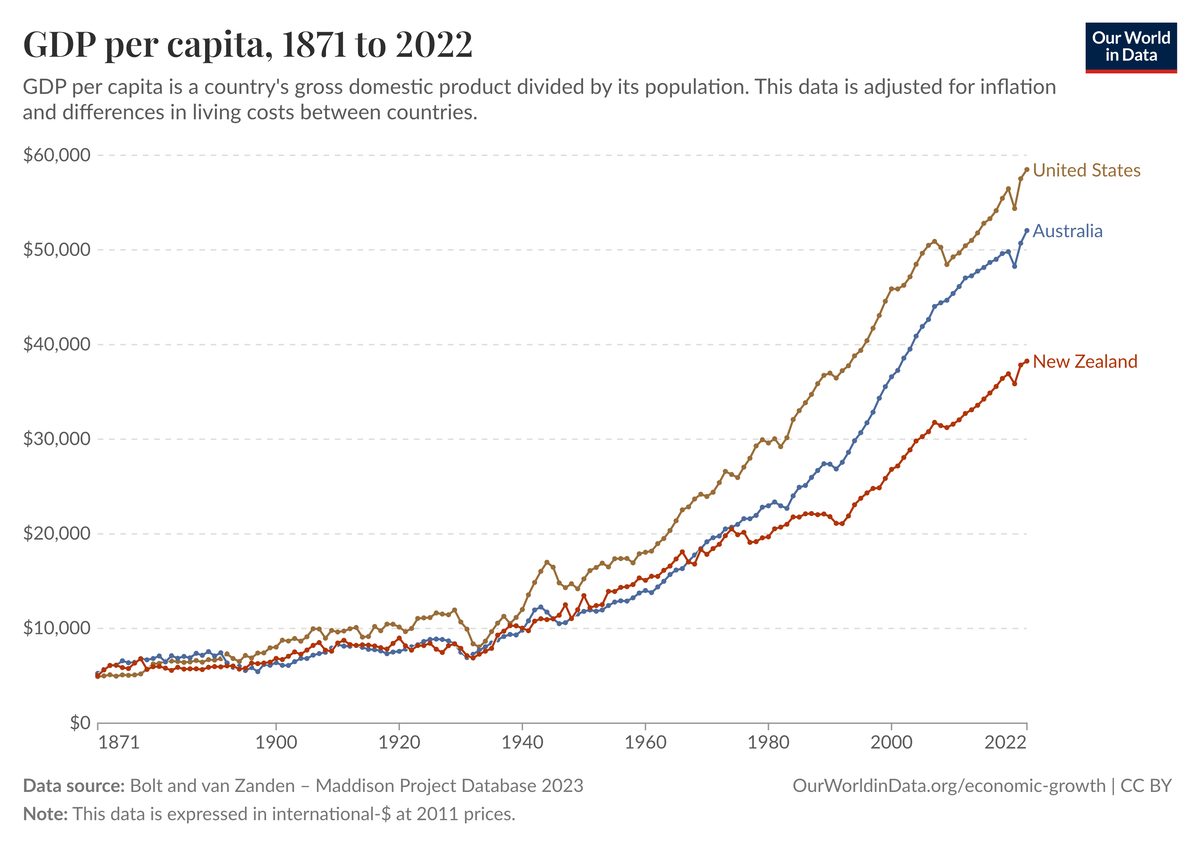
But it’s worse than it appears. We are being mogged not only by rich anglosphere countries, but by the world at large: in 1950, our GDP per capita was ~125 per cent of the OECD average; now it’s halved to ~60 per cent. Every year, we get overtaken by some former failed communist state or other basket case.
The last 20 years or so have been particularly grim: productivity is stagnant, and the New Zealand economy has become dramatically more insular, as in Reddell’s favourite (depressing) graph on tradables vs non-tradables.
So the economy’s not what it used to be. How about education?
When the OECD ran its first PISA exams in 2000, New Zealand placed near the very top of the world: third in reading and maths. This was not a fluke. Kiwi kids have been topping international reading surveys since the 1970s, and New Zealand was at one point considered a world-leader in pedagogy.
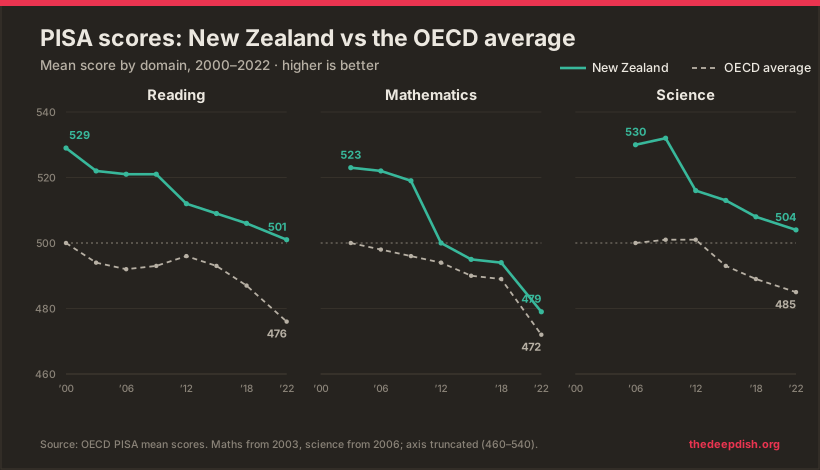
Since then it’s been all downhill. We have managed almost perfectly monotonically worse PISA scores since testing began. The decline isn’t unique to New Zealand—the OECD as a whole is going backwards—but we are falling faster than most of our peers, especially in maths.
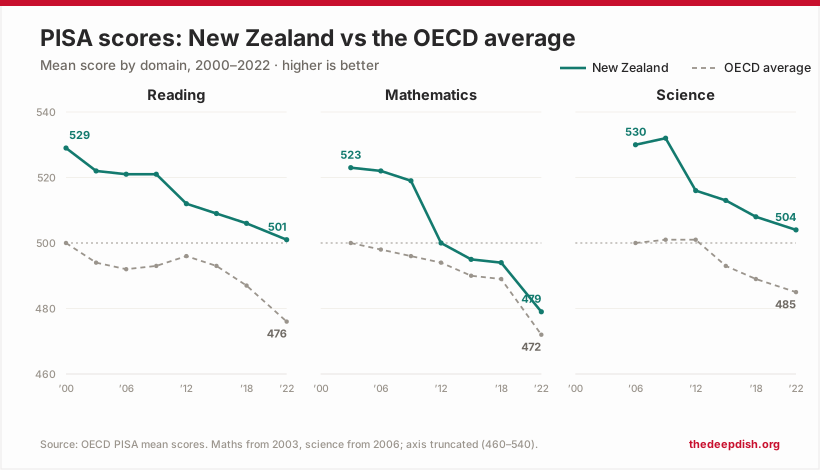
While we slide into mediocrity, under the surface, NZ looks more like Extremistan: it has one of the highest dispersions in scores amongst the OECD countries that take part in PISA, with a long left tail of underachievers.
So education has also fallen a long way from the golden age. How about our pioneering spirit of liberal policy entrepreneurship?
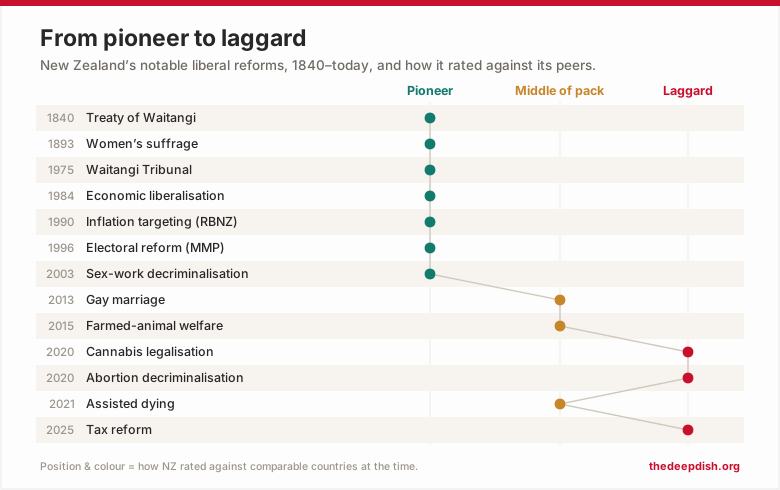
This analysis will necessarily be vibes-based, but here’s my rough scorecard. What we’re looking for here is an appetite to take big swings—the policies don’t necessarily have to be universally copied or lauded, although many of them are:
| Year | Policy | Position | Note |
|---|---|---|---|
| 1840 | Treaty of Waitangi | 🥇 Pioneer | Having any kind of treaty was unusual (vs terra nullius), even if the “just colonisation” story is largely myth. |
| 1893 | Women’s suffrage | 🥇 Pioneer | World-first: beat Australia (1894), the UK (1918/28) and the US (1920). |
| 1975 | Waitangi Tribunal | 🥇 Pioneer | World-first standing tribunal for indigenous grievances. Institutionally admired, remains politically divisive at home. |
| 1984 | Economic liberalisation | 🥇 Pioneer | The most radical and fastest free-market overhaul in the OECD. Debatable whether it went too far, or not far enough. |
| 1990 | Inflation targeting | 🥇 Pioneer | World’s first inflation-targeting, operationally independent central bank. Copied by Canada, the UK and Australia, and finally the Fed in 2012. |
| 1996 | Electoral reform | 🥇 Pioneer (Anglo) | A rare Westminster switch from first-past-the-post to proportional representation. Remains controversial. |
| 2003 | Sex-work decriminalisation | 🥇 Pioneer | First sovereign nation to fully decriminalise sex work. Used as a model for public health, though criticised by some feminists and conservatives. |
| 2013 | Gay marriage | Middle of pack | 13th globally. Ahead of the UK, US and Australia, but well behind Western Europe. |
| 2015 | Animal welfare | Middle, sliding | “Sentience” in statute is largely symbolic; real conditions for farmed animals are middling. Welfare grade slipping from A to C. |
| 2020 | Cannabis legalisation | Laggard | Rejected by referendum while Canada and US states moved ahead. Still has some level of de facto decriminalisation. |
| 2021 | Euthanasia | Fast follower | Legalised by referendum. Ahead of the UK, but behind Benelux, Oregon and Canada. |
| 2025 | Tax reform | 🛑 Laggard | Still the only OECD member with no broad capital gains tax. Long favoured by economists, rejected by successive governments. |
Again, you could argue all day about the merits of most of these reforms. But whichever way you slice it, it seems pretty clear that we have become more complacent and timid as a nation. While we still manage the occasional breakthrough, we are very much followers rather than leaders.
Timeline of a decline
To recap: while our economic position has been steadily deteriorating since 1950, our standard of education remained world-class for longer, and only clearly started going downhill from around the year 2000. The new millennium also marked an inflection towards a more insular economy, as well as a major spike in house prices (on which, more soon).
The timeline of policy innovation is much more open to interpretation, but I would argue there is also a noticeable break around the year 2000:
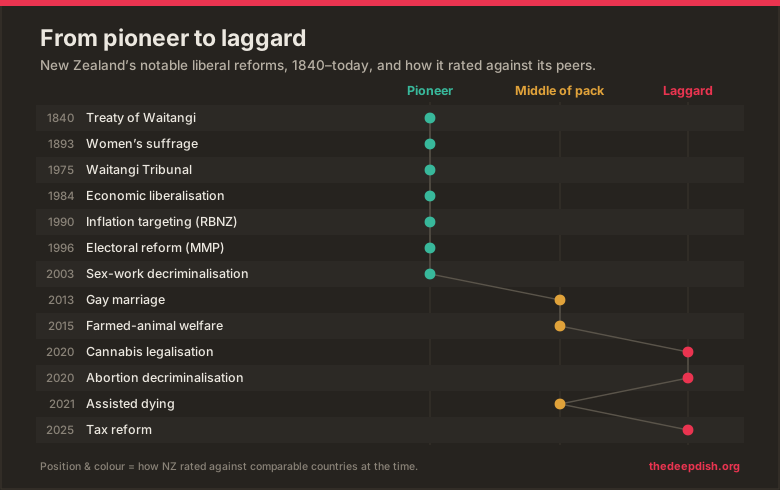
Now we have a rough timeline of the decline, let’s try to figure out which explanation of how New Zealand lost its mojo best fits the data.
Hypothesis 1: Cultural complacency
New Zealand was founded by adventurers and risk-takers. Māori made a series of extraordinary ocean voyages to tame a country that had been untouched for millions of years. Europeans and Chinese joined them a few hundred years later, bringing with them their own pioneering spirit.
Perhaps these founder effects only last a few generations, in the same way that the fortunes of a self-made industrialist are frittered away by his heirs. That tracks with my personal history: my grandfather was a stoic bushman and WWII vet, my father is a self-sufficient handyman type, the bravest thing I do is sit at my keyboard writing slightly unflattering portrayals of my countrymen.
As the national character softens, it changes which kinds of immigrants the country attracts. This was roughly Stephen Jennings’ thesis when he appeared as a guest on Conversations with Tyler:
JENNINGS: Well, as you know, I’m very negative about New Zealand. We have very sadly been a huge underperformer on just about every economic and social indicator you can look at. I think there’s partly a cultural element. I’ve thought that for a long time. I used to think that the very high immigration that we had would put some spark and some dynamism back into our society. That hasn’t been happening. There’s no sign.
COWEN: Do you think that’s the immigrants who self-select to going to New Zealand, or they’re somehow swamped by native Kiwi culture, or?
JENNINGS: I think it’s primary the latter, yes, and self-selection. You won’t go there if you don’t like that culture. If you want to go to somewhere more dynamic, more competitive, you’ll go to Australia. That reinforces their culture. I see some hope in Māori iwi and indigenous businesses, contrary to what most people would think. They bring a different culture. They bring a more open-minded international culture in many ways. They are being very successful. But that’s the small part of our economy. Yes, I don’t see a lot of silver linings.
There’s an internal selection effect too: the most driven and ambitious New Zealanders are the most likely to leave. But the composition of immigrants can’t fully explain our recent decline, because their share of the population has barely moved over that time period. Even if it had, immigrants are still positively-selected for overall: their kids outscore the locals on tests, for example. So that suggests that it is indeed the native Kiwi culture cutting them down to size.
Tyler Cowen has an observation I think about a lot in the context of my own life and my kids’ lives, about how one of the most valuable gifts you can give someone is to raise their aspirations:
At critical moments in time, you can raise the aspirations of other people significantly, especially when they are relatively young, simply by suggesting they do something better or more ambitious than what they might have in mind. It costs you relatively little to do this, but the benefit to them, and to the broader world, may be enormous.
A corollary is that one of the cruellest things you can do to a person—or a group, or a culture?—is to lower the standards you hold them to.
If we look at what went wrong in education, yes, there were some pedagogical misadventures, but the broader misstep is best characterised by the bigotry of low expectations. The teachers’ union response to tanking PISA scores was to argue that maybe it’s time for New Zealand to stop taking part in the testing, which, after all, “could be doing more harm than good” and reflects the “biases of Western educationalists”.
This attitude goes at least as far back as the introduction of the National Certificate of Educational Achievement (NCEA) in 2002. The idea was to move away from a rank-based system that forced some proportion of students to fail, but somehow the baby got thrown out with the bathwater. Critics pointed out that you could now earn NCEA credits for picking up rubbish, which was hyperbolic nonsense: I worked hard to earn my certificate through such academically rigorous activities as trapping rats, reversing a trailer, and using a chainsaw.
For two decades, nobody could see how low the floor had fallen. Then in 2023 a basic literacy and numeracy requirement was bolted back on to NCEA, and ~a third of students failed. At lower-decile schools, the numeracy pass rate was 28 per cent. Did we respond by holding kids to the basic standards? Of course not: the requirements were softened and the transition period extended.
Anyway, it’s just been announced that NCEA is being scrapped and we’re going to start all over again. So perhaps there is some room for optimism here?
Hypothesis 2: The housing theory of everything
Another explanation for our recent decline is the ‘housing theory of everything’. If you haven’t read the original Works in Progress essay, I highly recommend it, but the basic gist is that housing shortages are upstream of a whole cluster of apparently unrelated problems: stagnant productivity, wealth inequality, falling fertility, obesity, carbon emissions, populist politics, etc. Fix the shortage and you get a large fraction of the other fixes for free.
Auckland gets a mention in the opening paragraphs of the essay, because New Zealand is a shining exemplar of how not to do housing policy. Throughout the 20th century, house prices cost about 3x the median household income. Then this happened:
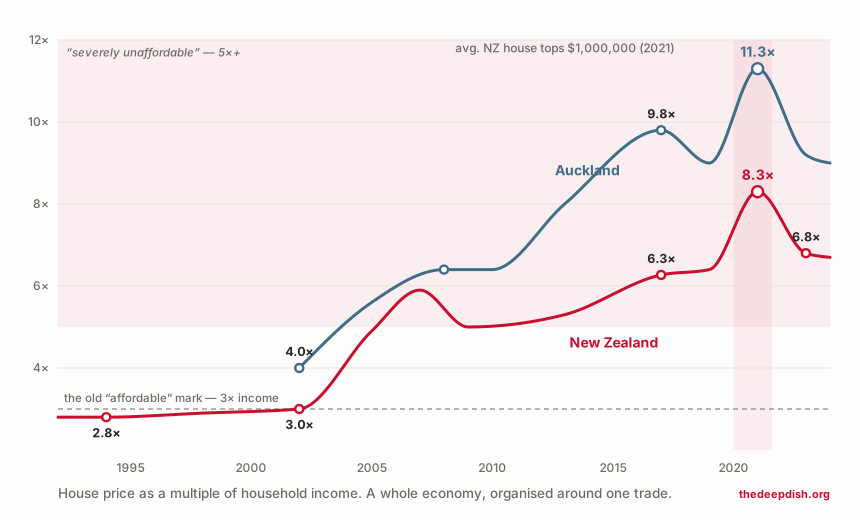
We are now frequently described as ‘a property market, with an economy tacked on’. When I bought my house in 2021, Auckland was one of the most unaffordable cities in the world. It was a truly cursed time: the climax of decades of inspiring bipartisan agreement to do absolutely nothing to fix the problem.
While homeownership rates tanked throughout this period, they never fell below 50 per cent, meaning the majority benefited from the madness continuing. (There is a blackly funny phenomenon in which you spend years cursing the frothy housing market and longing for a crash, then the moment you sign the Sale and Purchase Agreement, pivot into praying that the market never goes down lest you tip into negative equity.)
Politicians not only fiddled while Rome burned, but introduced policy initiatives which added even more fuel to the fire. This was perhaps unsurprising for those representing the landlord class, but a bitter betrayal from left-wing parties who claimed to care about the poor and underprivileged.
We still have no broad Capital Gains Tax and no prospect of getting one. But we are finally making progress on zoning law reform: the Works in Progress people have been complimentary of Housing Minister Chris Bishop’s efforts in particular.
So some more tentatively good news here. There’s a long way to go, but perhaps this deadlock is finally breaking. And we can see it in the price-to-income numbers: we are down from an insane, eye-watering multiple to a merely egregious, disgusting multiple.
Hypothesis 3: ‘Clean, green New Zealand’ as resource curse
My own crank theory is that New Zealand suffers from a mild version of the resource curse. Instead of being rich in oil or minerals, the abundant resource that we are dependent on is our land and natural beauty, combined with a temperate climate and low population density.5
Maybe you could make a proper economic version of this argument that ties it to our persistently high exchange rate and slide into non-tradables, though Michael Reddell pins that on our population choices, not on cows and tourists.6 I am not an economist, so I’ll leave it there.
My point is more that our obsession with being ‘clean, green New Zealand’ has constrained us in unhelpful ways. Outsiders probably don’t realise just how much our self-image as a nation revolves around natural beauty. In Air New Zealand’s safety video, the debate over “the 8th Wonder of the World” is settled by bestowing the title upon… the country of New Zealand.

As a Kiwi you don’t even notice how cringe this kind of thing is, because you are so deeply indoctrinated in it from birth. And so it feels sacrilegious to say this, but I wonder if the ‘100% Pure New Zealand’ schtick has been a big mistake.
Take for instance the issue of nuclear power. It was a Kiwi lad who first split the atom, but even he thought the prospect of atomic power was moonshine, and then we came out swinging hard against it in the 1970s: “I can smell the uranium on your breath”, etc. As kids in the 90s, we drew pictures in school about proudly being nuclear-free.
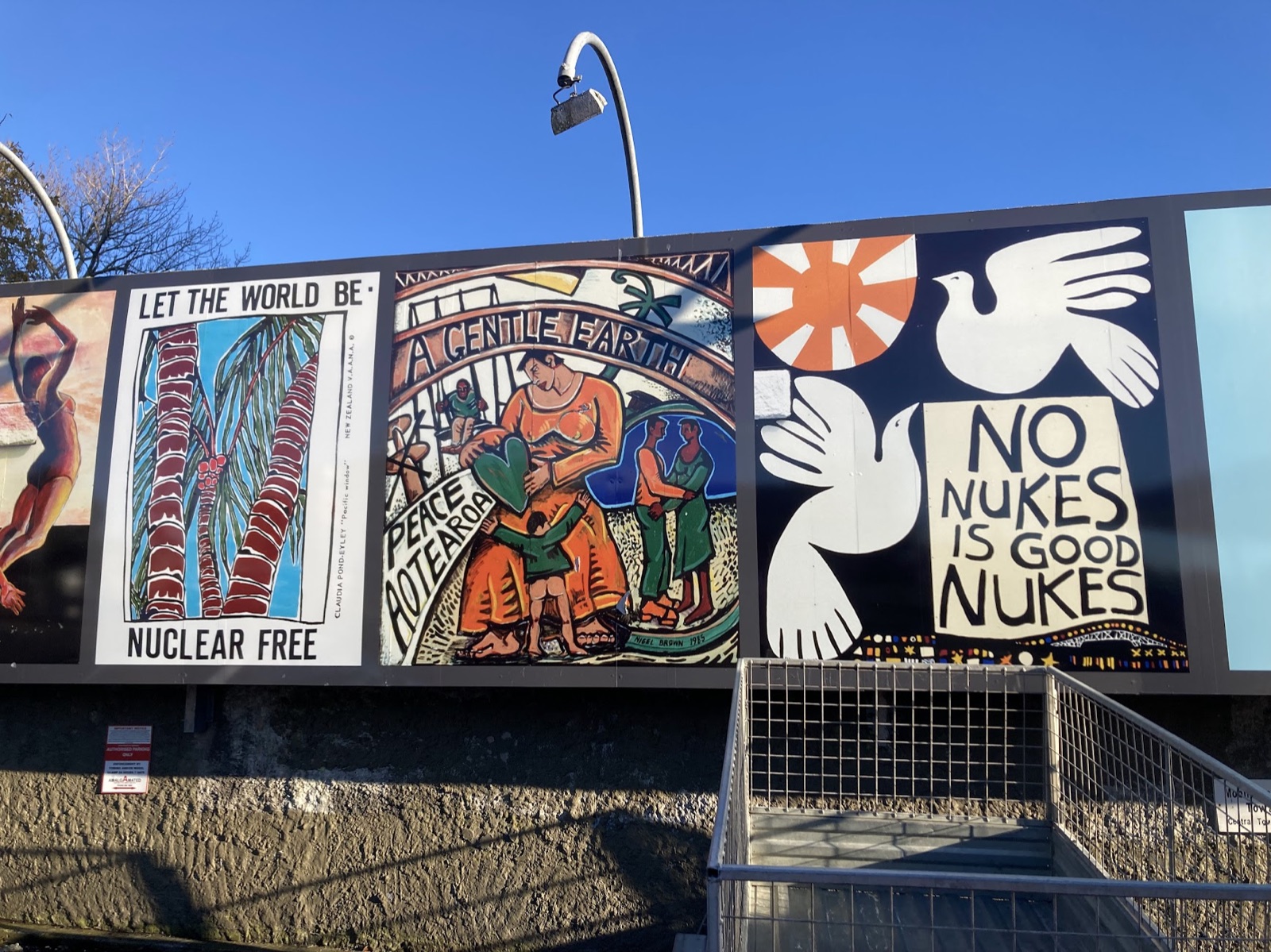
My sense is that very few Kiwis are aware that nuclear power is about as clean and green as it gets, and that the anti-nuclear movement may have done more to accelerate climate change and environmental degradation than any other group (not to mention having blood on their hands for the many lives lost to burning coal).
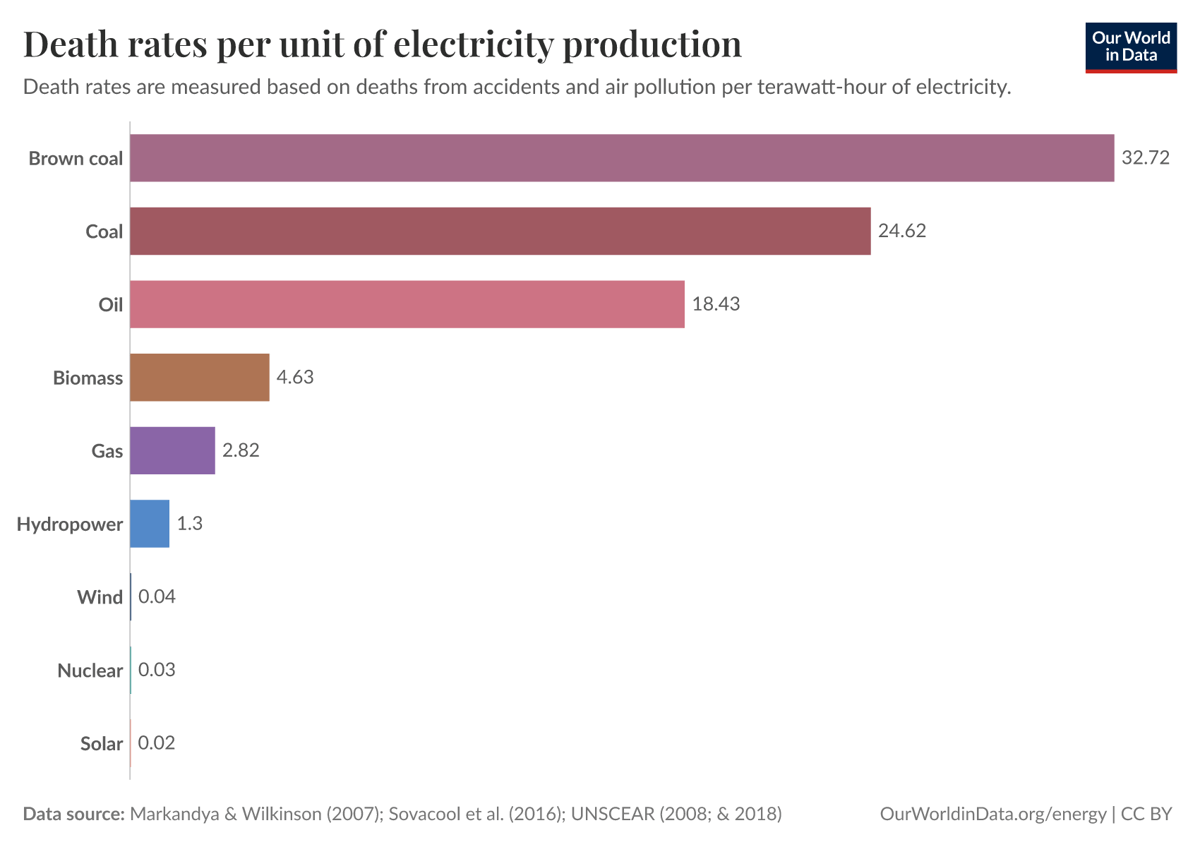
Once again, New Zealand can afford to be smug and complacent about being nuclear-free because of our arbitrary good fortune: we just so happen to have the right conditions for substantial hydro generation, combined with a low population density. Only a handful of other countries are in this position! If we are extremely lucky we will squeak by with renewables and improving battery tech, and finally get rid of our reliance on coal for baseline load. But being nuclear-free is not some bold principled stance: it is a luxury belief.
And so it goes with anything that might be a threat to our 100% Pure NZ branding: we are hostile towards genetically-modified crops, to freeing up zoning laws, to increasing population density, to investing in industrial R&D, etc. It is a kind of aesthetic problem, albeit one that is almost entirely illusory (we could have all these things and be cleaner and greener than ever!)
Why is there no revolution?
A slow decline over a century probably feels like the proverbial frog being boiled. But I think there is evidence of a sharp and noticeable downturn in the last 20 years or so. So why is there no revolution in the streets?
Part of the problem is mobility. Any New Zealander can cross the ditch to Australia with no visa required. It is pretty easy to get a work visa for the United Kingdom, and in general, the Kiwi passport is strong. If you don’t like your lot in life, you can vote with your feet: there are three times as many Kiwis living in Australia as there are in our own capital city.
We’ve also been bamboozled by generationally talented politicians. Both the centre-right and the centre-left have fronted likeable and PR-trained leaders you could have a beer with, while refusing to spend any of their political capital on much-needed policy reforms. Incredibly, voters still don’t seem to realise they’ve been shafted: almost 10 per cent of New Zealand’s GDP now comes from the bustling cottage industry producing hagiographies of Jacinda Ardern.
What to do? One bright spark I can see is that we might be on the cusp of having enough deeptech and software founders—particularly post-Rocket Lab—to form a critical mass. I am very proud of my wife, who instead of writing miserable carping blog posts, left her lucrative London finance job to come home and try to help build out the local ecosystem: she has invested in fusion, hydrofoiling electric ferries, battery storage, clean hydrogen, etc.
Other than that, I don’t really know how things turn around. I am interested to hear any other theories or historical analogues. How does a country regain its mojo? Does it just slouch into mediocrity indefinitely? Will we eventually see some kind of populist uprising or revolution?
Perhaps there will be some inscrutable vibe shift. Or perhaps it’s already underway, and the great World Spirit is flowing through me as I type these words. I love my country, and I would love to see it get its mojo back.
This post is also available on Substack — leave a comment here.
Notes:
Footnotes
-
I am fine. It was probably a viral inflammation of muscles in the chest wall. ↩
-
Actually I got lost and had to ask a nurse how to open one of those big pressure-sealed doors. But metaphorically, I breezed straight out of there. ↩
-
I’ve talked about barbells before in the context of what’s worth spending money on, structuring an investing portfolio, and avoiding the starving artist trap. ↩
-
The younger me would be astonished that I’d one day speak of Auckland in such glowing terms, but it’s only after years of travel that I have come to appreciate just how great this city is. The two glaring downsides of living here are the low wages and the expensive houses. But if you can afford a house, and you don’t care about maximising your earning potential, both these considerations are irrelevant. ↩
-
Roughly 20 people per square km, vs 280 per square km for the comparatively-sized United Kingdom. ↩
-
Tourism makes up almost 20 per cent of our exports, which is unusually high for a developed country, but not alarmingly high. ↩